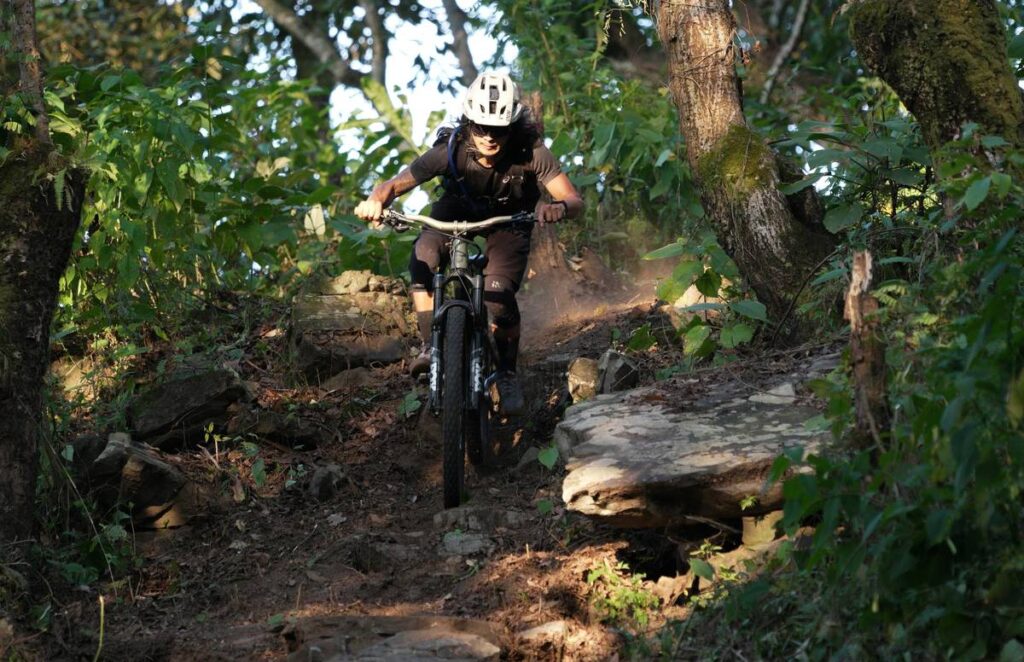
Ever pedaled uphill for 45 minutes only to realize you’re on a hiking trail—and getting side-eye from a group of very fit retirees with trekking poles? Yeah. Been there, sweat-stained jersey and all. If you’ve ever confused a fire road for a legit mountain bike path, this post is your redemption arc.
In this guide, I’ll walk (or rather, ride) you through everything you need to know about finding, choosing, and conquering the best mountain bike paths—especially if you’re eyeing an e-bike tour. You’ll learn how to distinguish legal trails from forbidden zones, why e-bikes are changing trail access debates, and exactly which gear won’t leave you stranded mid-ridge when your battery blinks red. Spoiler: It’s not just about power—it’s about etiquette, legality, and reading trail signage like a cryptic treasure map.
Table of Contents
- Key Takeaways
- What Even Counts as a “Mountain Bike Path”?
- How to Find & Legally Ride a Mountain Bike Path
- 7 Unspoken Rules of Mountain Bike Path Etiquette (Especially with E-Bikes)
- Real Talk: My Near-Disaster on the Moab Slickrock Trail
- FAQs About Mountain Bike Paths & E-Bike Access
- Conclusion
Key Takeaways
- Not all dirt roads or forest tracks qualify as legal mountain bike paths—check land management designations first.
- E-bike access varies wildly: Class 1 pedal-assist bikes are often permitted; throttle-powered models usually aren’t.
- The International Mountain Bicycling Association (IMBA) maps over 60,000 miles of trails in the U.S.—use their Trail Finder tool.
- Always yield to hikers and horses—even if your e-bike motor purrs like a stealthy kitten.
- Battery range drops by 30–50% on steep climbs; plan rides accordingly.
What Even Counts as a “Mountain Bike Path”?
Here’s the dirty secret: “Mountain bike path” isn’t a legal term. It’s a colloquial catch-all that could mean anything from a paved greenway to a gnarly singletrack carved into alpine scree. But legally and practically, what matters is who manages the land and what they allow.
According to the U.S. Forest Service and Bureau of Land Management (BLM), trails fall into categories like multi-use, non-motorized, or mechanized. Here’s where it gets spicy: many agencies classify e-bikes as “motorized” vehicles—even if they’re pedal-assist only—meaning they’re banned on non-motorized trails unless explicitly permitted.
I once showed up to Colorado’s famous Betasso Preserve with my shiny new Class 1 e-bike, thinking I was golden. Nope. The sign read: “NO MOTORIZED VEHICLES INCLUDING E-BIKES.” I got politely (but firmly) turned away by a ranger who’d clearly dealt with my type before. Moral? Don’t assume. Verify.
How to Find & Legally Ride a Mountain Bike Path
Step 1: Use Authoritative Trail Databases
Ditch random blog lists. Go straight to:
- IMBA Trail Finder (imba.com/trail-finder) – filters for e-bike-friendly routes.
- Trailforks – crowdsourced but moderated; look for the e-bike icon.
- Local land agency websites (e.g., “USFS Arapaho Roosevelt NF e-bike policy”).
Step 2: Decode the E-Bike Class System
E-bikes come in three classes (per PeopleForBikes):
- Class 1: Pedal-assist only, max 20 mph — most commonly allowed on mountain bike paths.
- Class 2: Throttle + pedal-assist, max 20 mph — often prohibited.
- Class 3: Pedal-assist up to 28 mph — rarely allowed on trails.
Step 3: Check Physical Signage On-Site
Even if an app says “OK,” look for posted rules at trailheads. Agencies update policies faster than apps refresh data. When in doubt, call the local ranger station. Yes, really. I keep the White River National Forest office on speed dial.
7 Unspoken Rules of Mountain Bike Path Etiquette (Especially with E-Bikes)
- Announce yourself early—shout “Bike back!” or “E-bike passing!” well before approaching hikers.
- Slow way down near horses. Their spook radius is real. Dismount if asked.
- Never ride muddy trails—you’ll carve ruts that destroy tread. If your tire leaves a mark, turn back.
- Carry a physical map. GPS dies. Batteries fail. Paper doesn’t.
- Respect “No E-Bike” signs—even if your bike looks like a regular MTB.
- Yield downhill riders when climbing. They can’t stop as quickly.
- Leave zero trace. Pack out snacks, wipes, and that banana peel (yes, it’s litter).
Grumpy Optimist Corner
Optimist You: “Just smile and say ‘Hi!’ to everyone on the trail—it builds community!”
Grumpy You: “Ugh, fine—but only if I’ve had coffee AND my suspension isn’t bottoming out on baby heads.”
Real Talk: My Near-Disaster on the Moab Slickrock Trail
Last spring, I led a small e-bike tour group on Utah’s famed Slickrock Trail—a sanctioned, IMBA-approved mountain bike path open to Class 1 e-bikes. Everything was smooth until mile 8. One rider’s battery gauge lied. Said 20%. Dropped to 0% on a 15% ascent. No cell service. No shuttle nearby.
We pushed. For 90 minutes. In 95°F heat. Lesson learned? Always:
- Test battery under load before departure.
- Cross-check digital % with voltage (below 36V = danger zone for most 48V systems).
- Have a bail-out plan (we now carry satellite messengers).
Ironically, the group rated it their “most memorable experience.” Go figure.
FAQs About Mountain Bike Paths & E-Bike Access
Are e-bikes allowed on all mountain bike paths?
No. While traditional mountain bikes are typically welcome on designated non-motorized trails, e-bikes are subject to additional restrictions. Class 1 e-bikes are increasingly permitted, but always verify with the managing agency (e.g., national park, state DNR, or local IMBA chapter).
How do I know if a trail allows e-bikes?
Check the trail listing on IMBA’s Trail Finder or Trailforks for an e-bike icon. Then confirm via the land manager’s official website or phone number. Don’t rely solely on app data.
What’s the difference between a fire road and a mountain bike path?
A fire road is a wide, unpaved service road primarily for emergency access. A mountain bike path is purpose-built for cycling—often narrower, with technical features. Fire roads may be open to bikes; mountain bike paths are explicitly designed for them.
Can I ride my e-bike in U.S. National Parks?
Generally, no—unless it’s on a paved road or designated multi-use path. Per NPS policy (updated 2023), e-bikes are treated as bicycles only where traditional bikes are allowed, but many parks still restrict them on natural surface trails.
Conclusion
Finding and riding the right mountain bike path isn’t just about adventure—it’s about responsibility. With e-bikes surging in popularity (sales grew 250% from 2019–2023 per NPD Group), trail access hangs in a delicate balance. Do it right, and you help preserve these routes for everyone. Do it wrong, and you risk stricter bans.
So next time you eye that dusty singletrack, remember: check the rules, respect the users, and pack extra water. And maybe skip the throttle-heavy e-bike if you’re headed to a wilderness area. Your future self—and the trail steward—will thank you.
Like a Tamagotchi, your trail access needs daily care… and occasional apologies to rangers.
Haiku Break:
Dust on tires hums
E-bike whirr meets hiker’s gasp—
Trail shared, not just passed.